

Treating fungal nail infections (onychomycosis) is one of the hardest dermatological conditions a podiatrist has to treat in clinic with infection rate risks being high. To get an effective treatment of fungal nails it is important to minimise the risk factors. A good thorough consultation with patient is crucial to ascertain what the best treatment approach would be for their particular presentation and severity of fungal nail disease. Consider if there are any negative prognostic factors e.g:
- How much of nail plate infected and occluded?
- How many nails infected?
- How long they have had the infection?
- Occupation whether work in environments great for fungus
- Sporting activities like swimming or running
- Health and age of the individual
- Immunosuppression
- Gastrointestinal health
- Other skin conditions e.g. psoriasis, Athletes Foot
- Whether others in close contact infected
- Family Genetics
- Poor biomechanics
- Previous treatment failures
These factors are negative, as they are influential indicators on how successful it will be in getting a good positive effective treatment of fungal nails outcome. I will quickly go through each one to explain further:
- Nail Plate Infection and Occlusion – If there is only a small part of the nail plate infected there is a better chance of getting a good treatment resolution, but the more the infection tracks down to where the nail emerges from, the matrix, the harder it gets to treat. Topicals struggle to reach newly developing nail. If the nail is very thick topicals don’t stand a chance of being absorbed deep enough to reach the infection. If there is a dermatophytoma, a densely compacted area of infection, this will need removing.
- Multiple Infected nails – The more nails infected makes treatment harder. May successfully treat a couple of nails, but if one is left infected could soon re-infect the others.
- Duration of Infection – Longstanding infections are a strong indicator of poor immune response and the possible presence of a nail plate biofilm. A biofilm is microscopic film like structure which is created within the nail plate by micro-organisms which traps dormant fungal spores which cannot be reached by any conservative treatment. These can at any time become active, just when you think the infection has been sorted.
- Occupation and lifestyle – Individuals who work in hot environments like kitchens are highly susceptible to getting fungal nails and getting re-infections due to the high humidity and temperatures which dermaphytes love to thrive in. Wearing of safety footwear with steel toe-caps can cause micro-trauma to nail plates allowing infection to get in as does running or any sporting activity which can cause repetitive damage to the nails. Individuals who regularly participate in water sports like swimming or boating risk constant softening and breaking down of nail plates to raise infection risks, not to mention the fact that moist communal areas are a high risk arena for contracting infections in the first place! Lifestyle can reduce an effective treatment of fungal nails.
- Health and Age – The prevalence of getting a fungal nail infection increases incrementally with age, as it does with failing health and systemic health conditions e.g. vascular disease and diabetes. Treating fungal nail infections in less healthy older patients is a lot harder with reduced circulation and nutrition to nail plates and poorer immunity against dermaphytes invading nail plates. A nail infection in an older nail plate e.g. 70+ can spread very quickly whereas in a younger individual it takes far longer and affects fewer nails. Re-infection rates are far higher in older age groups.
- Immuno-suppression – This follows on from point 5; if the health of an individual is compromised it is far harder to treat fungal nail infections. Individuals who are on immunosuppressant medication like methotrexate or undergoing chemotherapy have a compromised immune system. HIV patients are immunocompromised, as are patients who are on vast amounts of antibiotics. Antibiotics can negatively affect the immune system especially the health of the gut which leads on to point 7.
- Gastrointestinal Health – The health of the gut’s balance of good and bad bacteria, microbiomes, is important for getting a good fungal nail treatment outcome. If there is a dysbiois issue whereby there is an imbalance of more bad bacteria to good bacteria, the gut becomes leaky. Unwanted micro-organisms, toxins can enter the body systemically to raise inflammatory markers leading to ill-health and there can be a build-up of yeast, Candida in the intestines. Having a bowel condition like diverticulitis can lead to colonisation of Candida called Candidiasis. This can enter the blood stream and lead to the emergence of yeast infections of the skin and nails, Candida Albicans.
Referring, back to point 6; over subscribing of antibiotics can lead to the increased risk of getting a Candida infection as they change gut and skin pH.

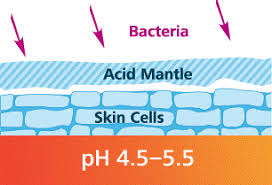

- Pre-existing Skin Conditions – The health of the skin is a good indicator on how effective a fungal treatment will work. If a patient has a pre-existing skin condition like eczema, it can demonstrate that the skin as an organ has compromised health. It has weakened immunity. The skin has protective barrier called the acid mantle. It is fine slightly acidic film with the optimal pH being 5.5. The body’s overall pH is about 7. If the acid mantle is damaged or compromised it can lead to Athletes Foot (Tinea Pedis) infections. You can have small amounts of Candida Albicans on the skin which cause no problems when the skin is acidic, but if the environment becomes alkaline at or above pH7, the candida switches from it’s yeast form to become fungal. Over scrubbing with washing products can do this as they have a pH 8-10.
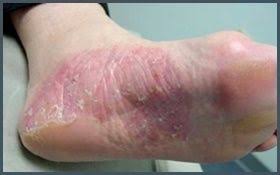
- Communal Risks – Living with an individual who has either fungal nails or Athletes Foot infection can predispose and significantly raise the risks of getting onychomycosis and reducing chances of getting a satisfactory treatment outcome. A shed skin flake from a person with Athletes Foot will contain thousands of dermaphytes and spores which are highly infectious. Clinical tests have shown that a squamous shed skin cell can live up to 20 months on a dry surface and 50 months in a moist environment, hence swimming pool areas are rife with potential infection.
- Family Genetics – There is more and more research being published which demonstrates a genetic predisposition to getting a fungal nail and skin infection. If for example both father and bother have fungal nails, it can raise the risk factors of an individual themselves getting infected too. It indicates there is little genetic immunity to help fight and resist getting infected. Can make treating harder.
- Biofilms – Impervious microscopic film in nail plates with drug resistant trapped dormant spores
- Biomechanics – We know as previously discussed that repetitive micro-trauma to nail plates through sport can be problematic. This can be addressed with good sanitising of trainers, ensuring they are a good fit and condition etc. but sometimes this is not enough. If a person’s feet have problems like clawing of the toes, flattening of the arches it could be because of a biomechanical musculoskeletal issue which needs to be addressed. A flattening rolling-in of the foot’s arch can lead to the joints of the foot being ‘unlocked’ and the foot being unstable. The big toe can become ineffective as a lever to spring the foot forward in the gait cycle and hence the big toenail gets constantly bashed and damaged, leaving it susceptible to getting infected.
- Previous Treatment Failure – Finally, if a patient has already tried numerous treatments to include topicals, anti-fungal drugs and lasers and failed to treat their fungal infection, then there is a potential resistance problem. Why have the treatments failed? It could be just poor patient compliance; giving up too easily during a treatment programme and not complying to advice, but it could also be one or more of the aforementioned points or the infection was not correctly diagnosed.
Conclusion
Providing an effective treatment of fungal nail is one of the most difficult and challenging dermatological conditions a podiatrist has to treat. It can be multi-factorial. Careful consideration must be given to any factors that may have a negative impact on prognosis. Experience counts for a lot, in knowing what the best treatment approach for a patient would be and highlighting directly to them the potential risk factors. Will a course of Lunula laser be the right treatment? Yes, it can be if all bases are covered e.g. breaking cycle of infection by treating any skin infection, sanitising footwear and treating infected close ones. If though a patient has already tried the Lunula and other treatments and failed, then maybe it would be prudent to remove the infected nail and laser to successfully eradicate any biofilms and deep-seated spores.
At Compleet Feet to ensure an effective treatment of fungal nails we generally go for a tailored treatment approach when treating fungal nails to use all the tools we have in our box to get a successful outcome. No one treatment fits all. We through years of effectively treating fungal nails know what works and what doesn’t by taking into consideration negative prognostic factors.