
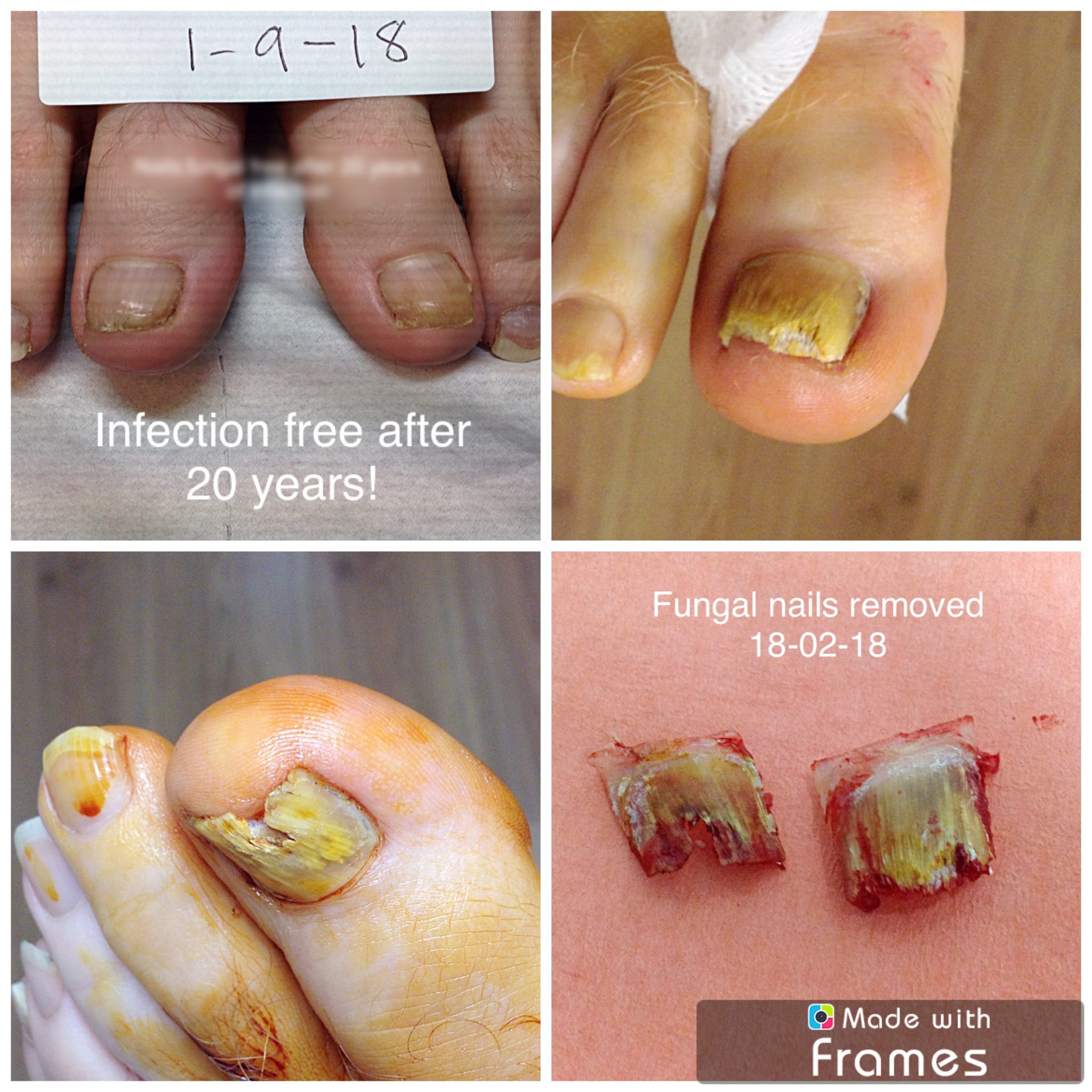
Chronic fungal nail treatments are Compleet Feet’s area of specialism. Patients require a thorough consultation to grade their presenting fungal nail disease (onychomycosis). This determines course of treatment. Determines most effective course of action. The longer the patient has had an infection, the more chronic it is. This potentially makes it harder to treat. Infection can be deeply imbedded. There may be the presence of a fungal biofilm.
Biofilm are microscopic films cause by micro-organisms. These can trap dormant dermaphytic spores, which are resistant to anti-fungal treatments drug or laser. It is hard as podiatrists for us to know if a patient has a fungal biofilm.
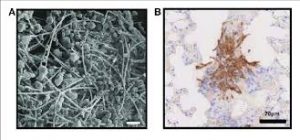
Fungal biofilm seen under a microscope
Case Study Patient KC
Patient KC was initially treated with thermal Nd:YAG laser. This was too uncomfortable. He therefor was switched onto Lunula ‘cold’ laser. After the course of treatment was completed a culture was taken. Culture indicated negative for infection. Patient was advised to be vigilant. Continue with post care treatment protocols to minimise re-infection.
Fungal Laser Treatment Failed
Patient was reviewed at the 1 year point. There were obvious signs on infection. Clearanail drug therapy was recommended stop infection in it’s tracks. Clearanail drug therapy involves the application of a device which painlessly introduces multiple minute holes vertically through the plate. Holes are placed at the edges of the invading infection. This allows for a topical antifungal drug, Terbinafine Hydrochloride to be absorbed into the nail plate. It directly targets the infection. Terbinafine builds up in the treated area to weaken and eradicate fungal dermaphytes.
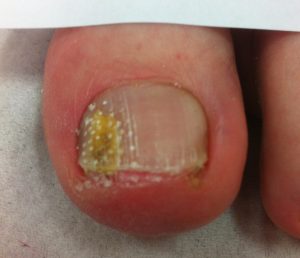
Clearanail drug therapy
Clearanail Drug Therapy Device Failed
The efficacy of topical drug absorbency and effectiveness is greatly increased. Unfortunately, if there is a presenting biofilm the drug won’t work. Trapped imbedded spores can not be treated. Time wasted. Sadly, in patient KC’s case precious time was wasted. The dormant spores when environmental conditions are right become active. A big cause of re-infection. They recolonise into the nail plate. The nail plate was became distorted and therefor uncomfortable.
What To Do When Fungal Nail Treatments Fail?
Another course of laser fungal nail treatment was not considered the best treatment option. Many dermatologists advise removing infected nails to remove any presence of a biofilm. This was recommended to patient KC to be followed up with 4 Lunula laser sessions.
Surgical removal may be deemed a radical and painful solution, but patient KC was pleasantly surprised how easy and comfortable it was. Nail beds post surgery heal up very quickly. Within a week and he was ready to commence with the lunula treatment. The Lunula laser eradicates any deep lying infection in the nail folds. It re-condition the nail bed and accelerates quick strong nail re-growth.

Chronic fungal nail treatments are most effective with a combined surgery and Lunula laser approach
Effective Fungal Nail Treatment Outcome
KC returned to the clinic 6 months later. He had full grown healthy infection free nail plates. Considering how long removed nail plates take to regrow this was amazingly quick. The Lunula increased nutrition and circulation to the big toes. Patient KC was extremely happy. He could now and proudly wear sandals in public! This concludes a combined treatment approach of surgery and Lunula laser is successful, whereby other chronic fungal nail treatments have failed.