
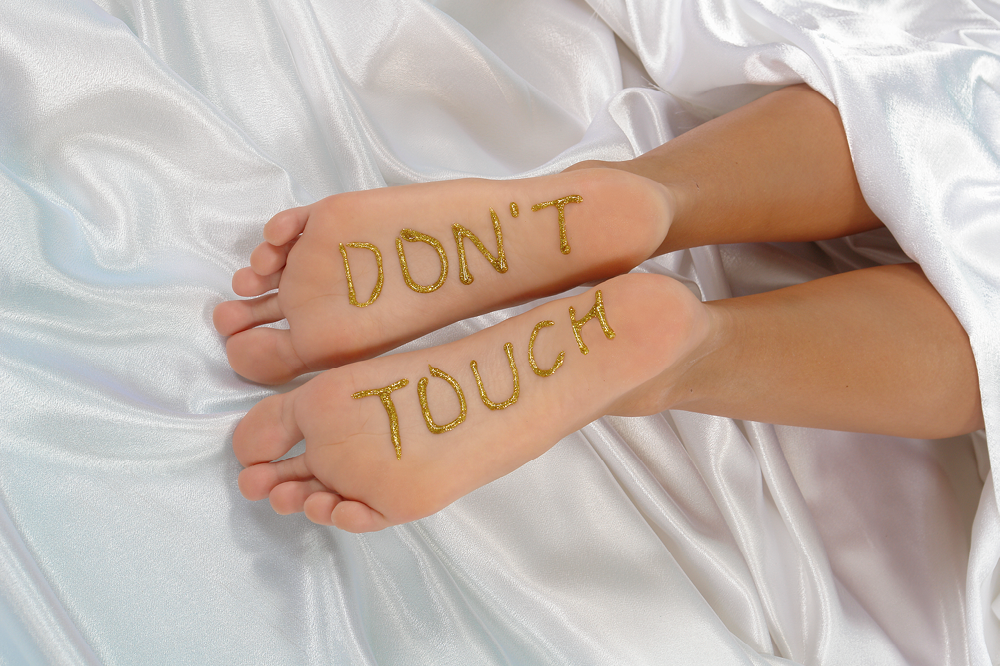
Love having your feet tickled or hate it? Scientists have found that tickling the soles of the feet can reduce stress as laughing releases endorphins which can be beneficial to health like reducing cortisol levels. Charles Darwin observed chimpanzees tickling the soles of their babies, as a form of social bonding. It releases the “feel-good” hormones in the body building emotional bonds. Tickling, stimulates the production of dopamine in the brain. Levels of dopamine are raised with laughter and feeling happy.
The soles of the feet are highly innervated with minute nerve endings called mechanorecpetors. There are known to over 7,000 of these nerve endings making feet one of the most sensitive parts of the body. The nerve endings responsible for detecting light ticklish external stimuli are the Pacinian and Meissner corpuscles. Interestingly, the right foot tends to be more ticklish than the left. This is because the part of the brain responsible for sensation on the right side of the body; the left hemisphere is linked to positive emotions like laughter. The tickling sensation only occurs when someone, or something else tickles the foot.
Scientists based at the University of Auckland, New Zealand discovered that women’s feet are overall more sensitive than males. From this research they designed the TickleFoot to stimulate the benefits of tickle stimulation. In theory sounds great, but how long can these be worn, before sensory adaptation occurs or they become annoying or painful? Tickling the soles of the feet can actually be torturous for some. The pleasurable positive effects tip into become negative, inducing a state of tension, anxiety and stress. It can become unbearably painful.
Wikipedia talks in length about Tickle Torture. It explores the history around pleasure and pain induced by tickling for either good or bad. Tickling can be used as a form of torture. The British Medical Journal published an article recalling an old form of European torture, whereby the feet are tickled for pain. A goat is encouraged to repeatedly lick the soles of it’s victim’s feet, which have been repeatedly dipped into salt water.

Tickling of the feet by a goat was used as a form of torture
When the skin is hypersensitive to tickling it can tip into allodynia. Alloyndia is being hypersensitive to touch. External stimuli like light touch, textures and temperature changes, which don’t usually cause pain are painful. Just a light touch of the sole of the foot can be irritating and unbearable in a painful way. Not to be confused with hyperalgesia. Hyperalgesia is caused by a stimulus that provokes pain, not tickling! Patients with neuropathic feet can have allodynia.
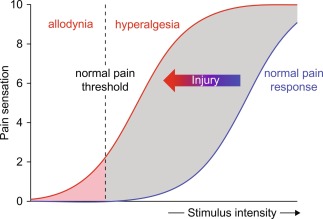
https://www.sciencedirect.com/topics/neuroscience/allodynia
Alloyndia could be considered to be ‘autistic skin’. Alloyndia is considered an autistic trait. Research suggests there are specific gene mutations which affect the sensory nerves in the skin. This can be more prevalent in individuals on the Autistic Spectrum. You could say that the ‘feet- back’ is exaggerated to the brain at a heightened exaggerated level.
Scans of non-neurotypical individuals when compared to those of the neurotypical, show areas of the brain involved in sensory processing are hyperactive. This doesn’t necessarily follow, that if you have oversensitivity to having your feet tickled, that you are on the autistic spectrum. We all process stimuli differently, but it is of interest to note.
It is all hinged on the pleasure and pain principle, that too much of a good thing can becomes a bad thing. At first foot tickling is pleasurable, stimulating positive dopamine, but can then become painful, stimulating the harmful effects of cortisol. Whether you like your feet to be tickled or not is truly a subjective experience. Are you thin or thick skinned? Would consensual foot tickling at the beginning of the day set you up for a lighter step?