
New Treatment Paradigms in Treating Resistant Fungal and Verruca Infections
In my last 2 blogs I discussed new concepts around fungal nail biofilms, and the hypothesis of verruca ‘pseudo-biofilms’. These combined with fungal skin/ nail colonies, creates treatment resistance. A podiatry dermatological clinical challenge. Having the HPV verruca virus and mycotic fungal skin means literally having to work harder to restore a healthy infection free skin.
As previously discussed, a combined holistic approach is required. Treating from the inside out, and then some. Primarily podiatrists are concerned with treating the external environment; the skin and the nails. The internal environment, the systemic health of an individual is often out of our hands, but we can help to advise and make suggestions;
-
Make an appointment with your GP
-
Get blood tests
-
Eat a good diet
-
Don’t smoke
-
De-stress
Educating the patient to understand the importance of skin health is fundamental. The skin is the body’s largest organ. It’s main function is as a protective barrier. It is a complex organ with a flourishing microbiome.
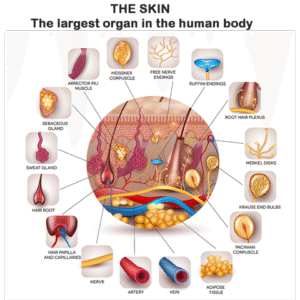
The skin is the body’s largest organ (curtesy of Chagrin Valley Soap and Salve)
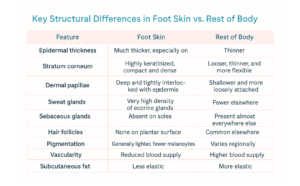
Importance in Understanding the Skin Microbiome
In the same way gut health microbiome is important for general well-being , it is the same for the skin. The importance of understanding what constitutes and maintains a healthy skin microbiome, is leading the way in how to effectively treat skin infections. The skin on the foot is highly specialised. It is designed to cope with constant mechanical stress, moisture, pressure and microbial exposure.
It has a protective outer layer acid mantle which is a slightly acidic film pH 4.5 – 5.5, composed of
-
Sweat -Lactic and amino acids
-
Sebum – Fatty acids
-
Keratinocyte metabolites
-
Microbial secretions from commensal bacteria and fungi
Commensal Microorganisms of the Foot Skin
Commensals are microorganisms that naturally live on the skin without causing disease
-
Bacteria – Adapt to dry, keratinised environments
-
Fungi (Mycobiome) – Yeast, in small low level colonies e.g. Candida Albicans.
-
Microbes – Archaea is a single celled micro-organism.
Archaea help to maintain skin’s protective acid balance, have mild antimicrobial action, support anti-inflammatory signalling (cytokines) and secrete bacteriocins and fatty acids to deter unwanted pathogen colonisation.
Bacteriocins are natural antibiotics made by bacteria. Everything outlined above when …….. in moderation, maintains a healthy skin ecosystem. When there is an imbalance for example, over-colonisation of candid albicans; a fungal nail infection (onychomycosis) can occur. Imbalances of bacteria and fungi can result in treatment resistant biofilms.
New Treatment Paradigms for Treatment Resistant Foot Infections
Old treatment approaches to treating skin fungal or HPV verruca infections have been to ‘blast’ them. Eradicate to resolve, whether that be chemical cautery, cryotherapy, excision or high powered lasers. This is now beginning to be deemed outmoded, as treatment modalities on their own. Uncontrolled skin damage can inadvertently make the whole scenario worse, and entrench the infection. Lead to biofilm formation.
A softer, softer more holistic approach is being hailed as a better way to do things, especially in immune compromised individuals, diabetics and those with circulatory issues. It all about resetting, strengthening, restoring microbiome balance. Treating the surrounding environment and not just the infection or verruca in isolation.
No more harsh chemicals being applied daily on the skin. Drying out infections with surgical spirit can damage the skin’s delicate microbiome; make things worse. Applying high concentrations of urea based creams, or over-use of antifungal topicals. All these can tip the skin’s pH balance, upset the protective acid mantle and create a situation of dysbiosis. A disruption of healthy skin commensals to cause an unwanted overgrowth/ imbalance of good versus bad.
Looking at ‘resetting’ and rebalancing the skin’s environment to mediate an immune response. This basically is about improving the overall health of the skin. To initiate a combined multi-layer approach. Careful skin debridement, right prescribed creams, ensure all cycles of infection are broken , to essentially be more holistic to mitigate re-infection and eradicate biofilms. Look more laterally, at how any potential mechanical stress maybe impacting skin health. Example: a prominent plantar metatarsal joint with a recalcitrant verruca needs to be off-loaded, mechanically addressed.
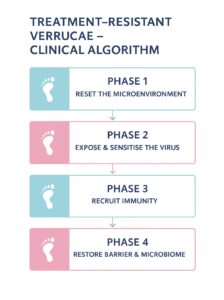
New Approach to treating treatment resistant foot infections
A good verruca or fungal foot infection programme is to use products that actively help to recondition the skin and sanitise e.g probiotic creams, Clinisept, microbial reducing dressings. Applying the right combination of antifungal skin products combined with pulsed oral drug therapy, surgical nail removal. Needling for verrucae or Swift to expose and sensitize the virus. Recruiting immunity and improving nutrition and circulation to skin with low level laser photobiomodulation e.g. Lunula. Essentially using a multi-layered approach. The new treatment paradigms suggest – be less aggressive and more patient. Work with the body’s immune system. Facilitate the patient to do more themselves. If this all fails then know when to appropriately refer on.