
Thick nail, paint remove? What advice should be given to a patient if they present with really thick gryphotic or diseased nails? Paint to hide them or remove? Last Saturday I treated 2 patients with such nails and for each patient the treatment option could not be more different. I shall refer to them as patient A and patient B.
PATIENT A
Patient A was 65, diabetic with very long gryphotic nails. I previously treated her 7 months before and greatly reduced the nails. They grew back quickly and we

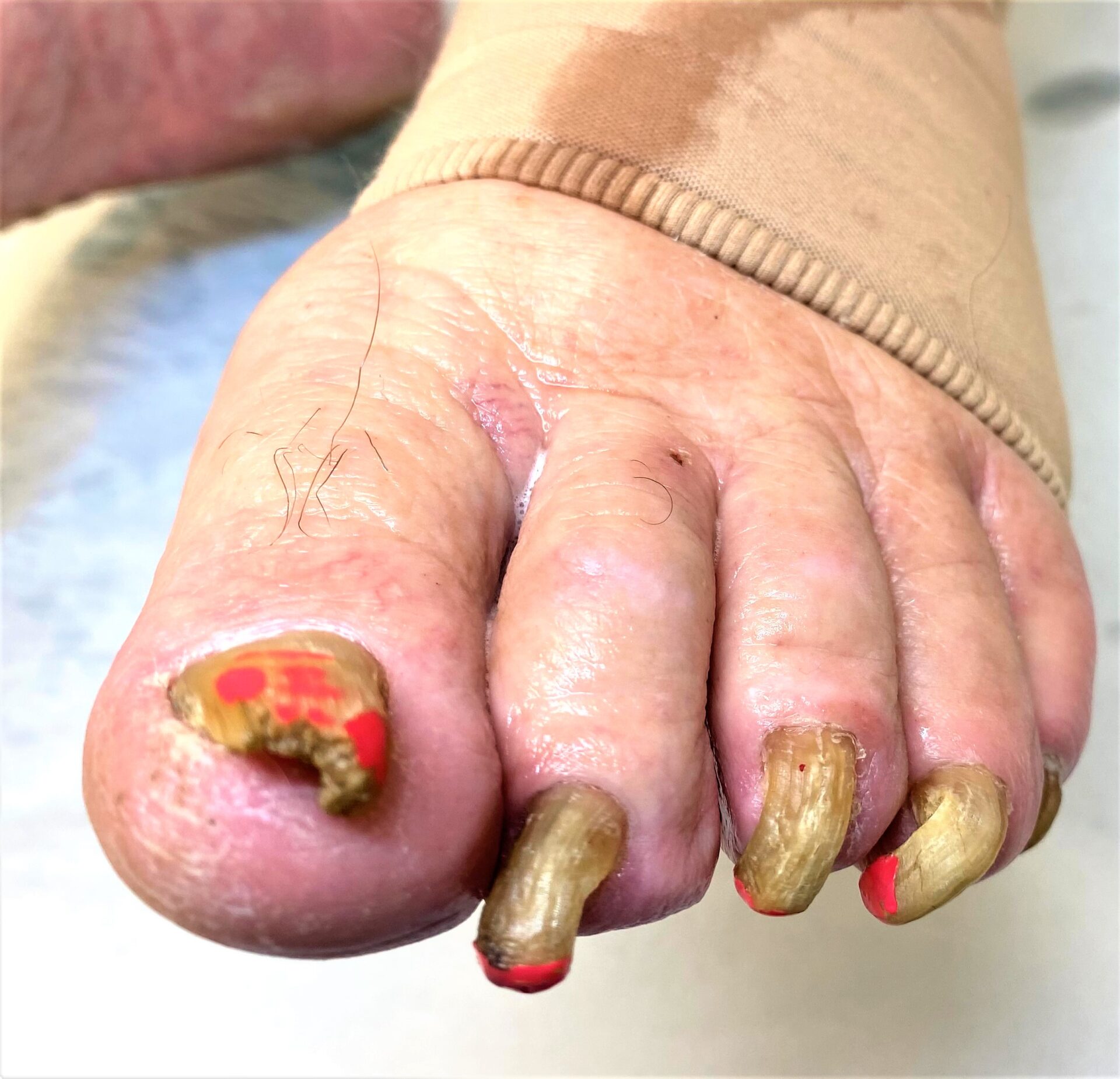
BEFORE: Thick gryphotic nails
re impeding walking. Patient complained they were very uncomfortable and limited what shoes she could wear, but she was more concerned that they looked “ugly!” Could I please make them look beautiful. I commented I would do my best, but due to the damaged nature of the nails they would not look like normal healthy nails. They had been damaged over time with micro-trauma and possible fungal infection.
Once painlessly reduced the patient presented me with some nail varnish. Could I please paint them? I appreciated she hated the appearance of these nails, that painting on a little varnish would give her the psychological boost she required. Varnish can hide a multitude of sins and there was no active fungal nail disease.
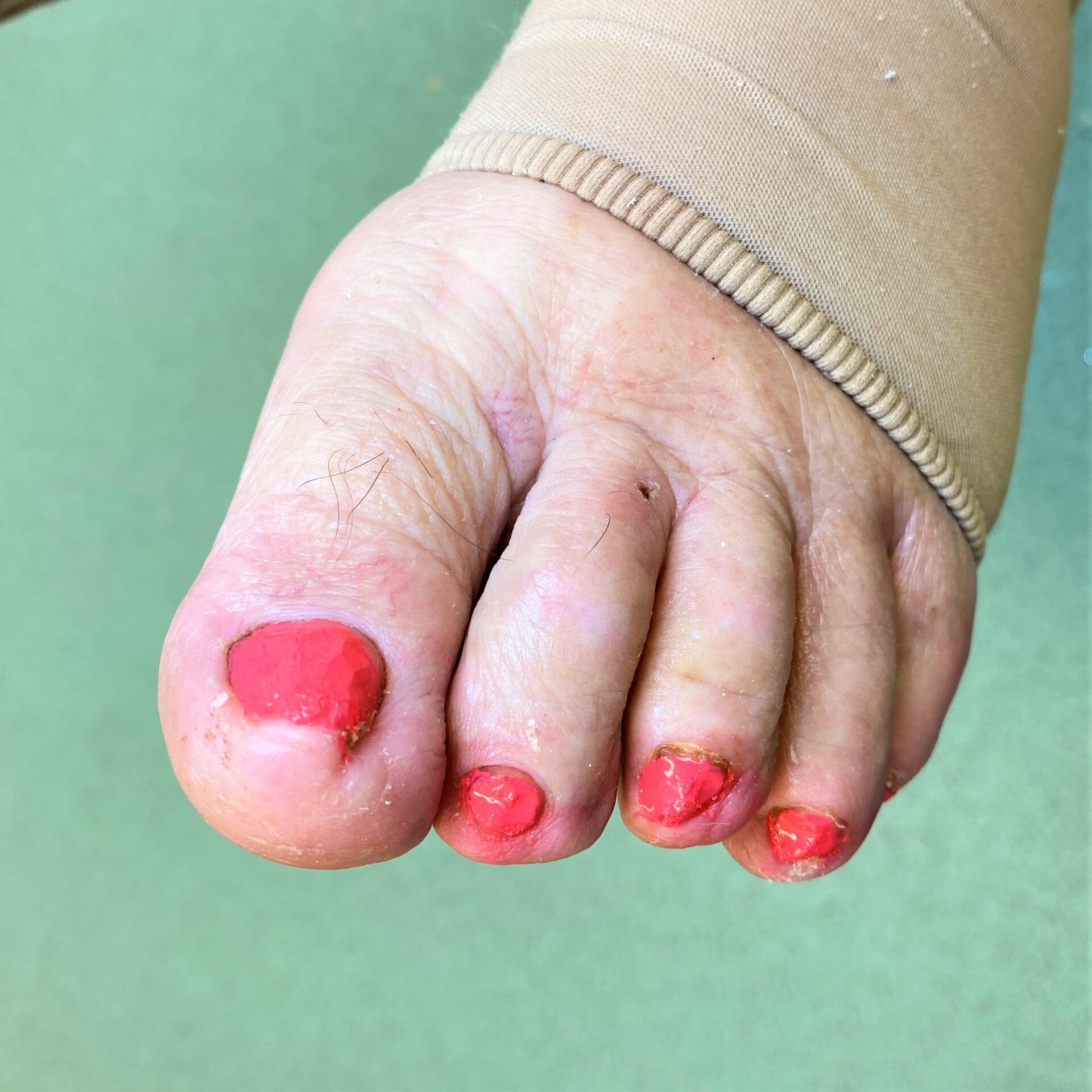
AFTER: Thick gryphotic nails after conservative treatment and varnish
Patient A was delighted with her now comfortable painted toenails, but I did have to sternly advise her on future management. Being a diabetic having such thick and deformed nails were a health issue. She risked potential ulceration and infection, whereby the nail bed with increased overlying impact pressures, could break down subungually underneath the nail plate. The longer the nails became her choice of foot wear was impacted as was her gait. I advised she needed to have regular treatment every 8 weeks to ensure that the thickness of the nails were kept to a healthy thickness. Thick nails can be conservatively treated and made more comfortable.
PATIENT B
Patient B had been struggling with fungal nail disease (onychomycosis) for over 20 years. He is 52 and in good health. He had tried many treatments to include laser and surgical removal (5 months before), but they just grew back just as thick as before. He was previously advised that his nails would grow back thick as the nail beds were so damaged. Despite the eradication of most of the fungal infection, the nails were just as uncomfortable. He enjoyed the relief of when they were weren’t there after his previous nail surgery. Due to the application of Lunula laser the nails grew back very quickly as seen in the photographs. The Lunula laser is FDA cleared to accelerate nail re-growth. Full nails back in 5 months, but just as thick.
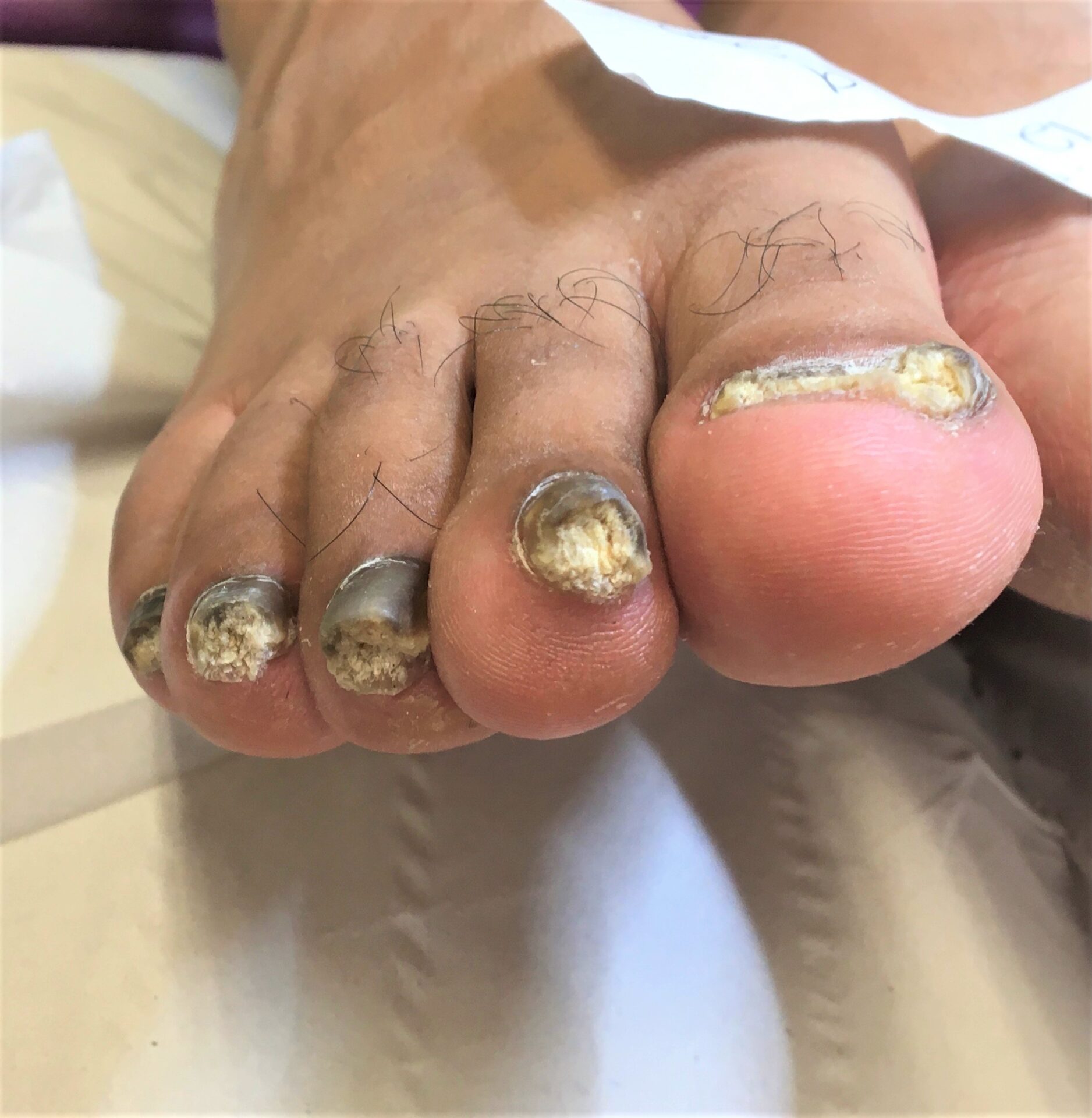
BEFORE: Thick diseased nails showing damaged nail beds
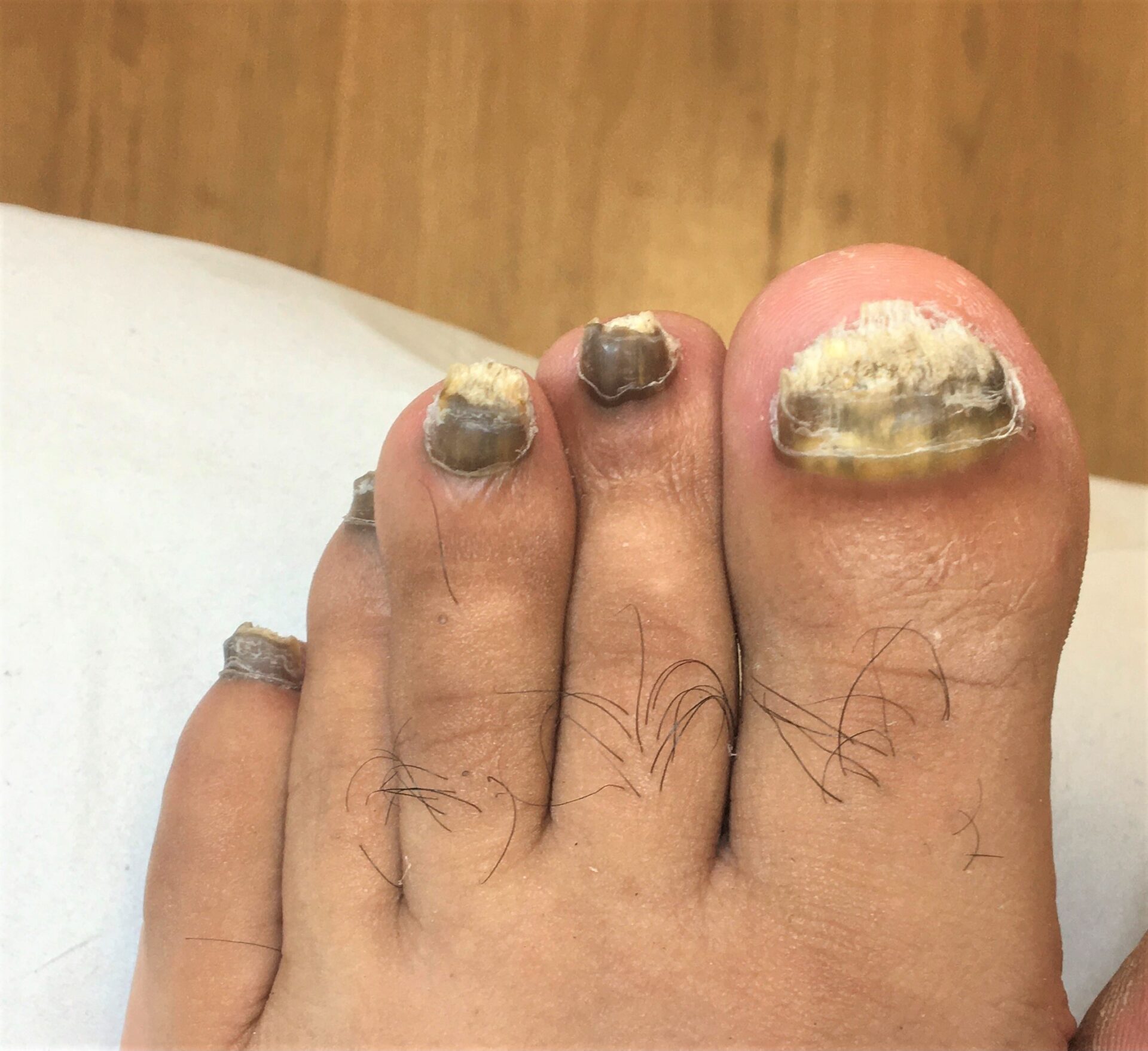
After a long considered discussion with the patient he requested to have all 10 nails surgically removed and phenolised to inhibit regrowth; “They are so uncomfortable and even when they are reduced they cause me pain”. I agreed with patient B. The best long-term solution was to remove all of the deformed and diseased nails. These nails were never going to improve. He could have them reduced every couple of months, but this was just short term management. The plan was to remove the 10 nails during 2 surgical appointments under local analgesia. Removal would be comfortable.
Once removed and healed, which could take up to 4 – 6 weeks, the nail folds would contract inwards and patient B would have presentable comfortable toes. He may even have what looks like a nail plate growing back. A thin pseudo nail. This pseudo nail is made up of keratin and fibrous scar tissue from the nail bed, but is not a true nail.
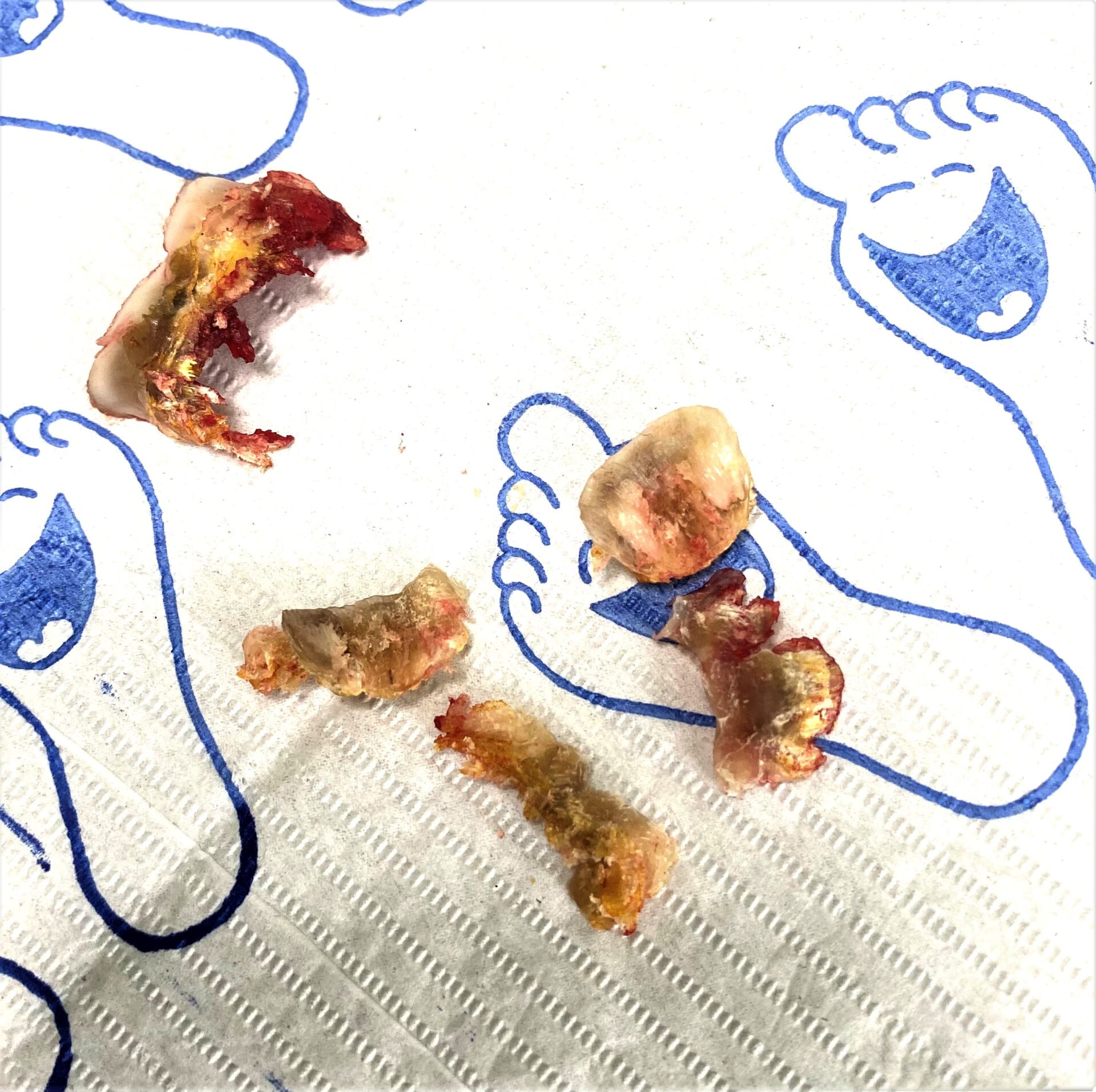
Thick damaged nail plates after surgical removal
It is very important when removing such thick and damaged nails to ensure that the growing proximal edge is completely freed with a nice clear edge as shown in the above photograph. Any fibrous scar tissue must also be excised form nail bed and nail matrix thoroughly phenolised to stop potential regrowth.CONCLUSION
Generally, a podiatrist will bevel down and debride thickened deformed nails, as seen with patient A. It would not be suggested as a long term solution to surgically remove them, especially as she is diabetic. Maybe 1 or 2 nails if there were ongoing issues of pain or infection, but normal practice would be to conservatively manage them on a regular basis.
In the case of patient B his diseased and thickened nails were very uncomfortable, even after a course of fungal nail treatment. He was wanting a long term solution, that surgically removing all of them would give him the relief he wanted. He was not concerned with cosmetic appearance, and certainly did not want to paint and hide them like in the case of patient A. He understood all the issues around healing, and was prepared to go through the surgery once again to ensure years of comfortable toes ahead of him. Sometimes a more radical treatment approach is deemed the best long term solution. This was a case when ‘yes’ thickened nails should be removed. Now, the onychomycosis was not the issue, but thickness was.