
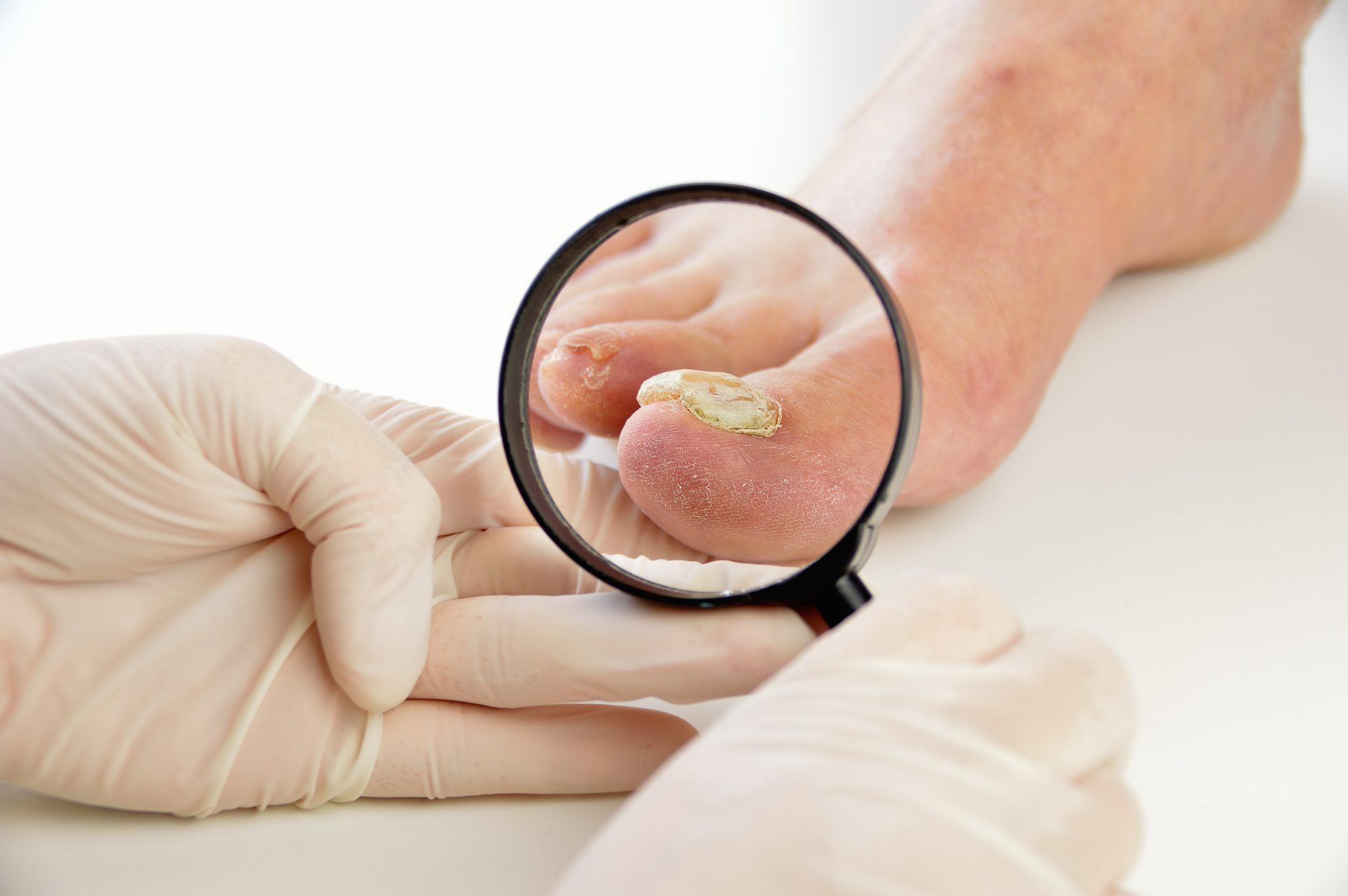
Why is the Incidence of Fungal Nail Infections on the increase?
In a recent marketing article from a medical supplies company promoting treatments for onychomycosis they claimed that the incidence of people in the UK with fungal toenails is as high as 29%. This figure has increased significantly when only a few years ago it was reported to be running about 10% in any given population. Why the dramatic increase I ask myself? What has changed? The most predisposing risk factor for developing fungal nails is advancing age, with the incidence dramatically increasing to a reported 18.2% in patients 60-79 years of age compared to 0.7% in patients younger than 19 years. It is also reported that males are up to 3 times more likely to have an infection than women. It could be assumed because we do have an aging population that naturally the incidence rate will rise accordingly to explain some of the increase. The elderly can have impaired circulation to the toes. Reduced blood flow means reduced nutrition to the nails thus they can weaken and be more vulnerable. Poor circulation impairs our immunity to resist onychomycosis.
In clinic we note in younger patients onychomycosis takes a longer time to get established, whilst in the elderly they can take off like wild fire as there is compromised natural immunity, This is the same for the diabetic patient. Fungal infections get deep seated very quickly and proprietary anti-fungal treatments are largely ineffective. It seems like the odds are stacked up against diabetics especially in the older age group. Immunity is a big factor in being susceptible to onychomycosis. Current research exploring the predisposition to developing an infection suggests there is a genetic link. There is a high prevalence on onychomycosis in certain families which was initially attributed to cross-infection, as can occur between people sharing the same environment. Interestingly only certain family members developed an infection whilst others were immune. By exploring others generations of the same family not living in the same household of the same blood line e.g. older siblings, grandparents they had fungal nail infections too. This does indicate there is a genetic link, but more research needs to be done to look into the genetic sequencing. Maybe a cure in the future will be immuno-therapy addressing the missing genome which gives a person the specific immunity against fungal dermaphytes?
Diabetes is a big factor in being susceptible to onychomycosis. The number of people developing type 2 diabetes is on the increase. There are an estimated 3.2 million diagnosed diabetics in the UK. Diabetes is an etiological factor for increasing the chance of developing onychomycosis. Approximately 1 in 3 diabetics have fungal nail infections, which is very high. Diabetics can be immuno-compromised, which with vascular deficiencies like in the elderly, then coupled with diabetic neuropathy (altered sensation) their feet are at risk. The lack of sensation means toenails can be more readily damaged leaving the nail plate compromised making them a portal of entry for fungus to enter the nail.
So what other factors could be increasing the incidence of reported fungal nail cases? One needs to look at the mycology of onychomycosis, what fungus likes. Fungal parasites are like mushrooms, they like warmth, moisture and the dark to create the ideal condition to thrive. Our shoes are great incubators so the more we wear closed in shoes there is an increased chance to get an infection. If you consider our very short summers we are not in open footwear for very long so this will increase the incidence. Working in hot indoor environments is also a risk factor.
In warmer countries like India the incidence of onychomycosis is low. People are predominantly in open toed footwear, whilst in colder countries like Scandinavia, whereby everyone is wearing closed in footwear, it is naturally higher. Wool lined footwear like the cosy UGG boot can be disastrous for susceptible individuals. They can provide ideal conditions to propagate infections; moist, dark and warm. Fungal spores get trapped in the fibres and are hard to eradicate. Spores can thrive externally up to 20 months. It is hard to tell patients to throw away their beloved UGGs or moccasin slippers, but they really are hard to sanitise, as are any shoes with high fabric fibre content. Sport shoes are an example of footwear which can be hard to sanitise as spores can get entrenched.
On the subject of sport shoes, sporting individuals present a sector of the population who could be responsible for the increase in fungal nail infections. These individuals are constantly causing micro-trauma to their nails making them vulnerable to problems, and their hot sweaty trainers can provide ideal conditions for infections to take hold. The number of people in the UK participating in sport has increased dramatically in the last 10 years. Sport England 2014/15 report a figure of 15.5 million adults playing sport at least once a week, this is up from 1.4 million in 2005/6.
Other possible etiological factors for pushing up the incidence of onychomycosis is the increased number of individuals visiting nail bars to have their nails painted. The standard of sterilisation in nail bars is inadequate. Nails nippers and files are rarely autoclaved, but left to soak in Barbicide disinfectant solutions. This does not destroy fungal spores or dermaphytes. Infections are readily transferred from one client to another, then occluding the nails with gels and layers of nail varnish infections will allow infections to take hold unhindered and unseen.
Conclusion
There are so many variables and etiological factors that could help to explain the increased incidence of population fungal nail infections e.g. aging population, diabetes, poor summers, but has the incidence significantly gone up? Is onychomycosis now more virulent, more contagious than ever amongst individuals? Are there more reported cases of individuals going to their GPs? That I cannot answer, but I do believe one of the main reasons there appears to be a higher incidence, is people are no longer prepared to put up with having onychomycosis. There is more open conversation about having an infection. Individuals are researching what is wrong with their nails and actively looking for a cure. More individuals are doing reported internet searches for remedies. We are less prepared to hide our crumbling nails under the carpet and ignore them, especially as there are so many proprietary treatments advertised on the market. Personally as a podiatrist I have drawn out of the woodwork many more people than ever before with onychomycosis. I can now offer real effective treatment solutions when previously I may not have made so much of a fuss over their fungal nails, as all I could previously advise was take potential toxic drugs or use Tea Tree!