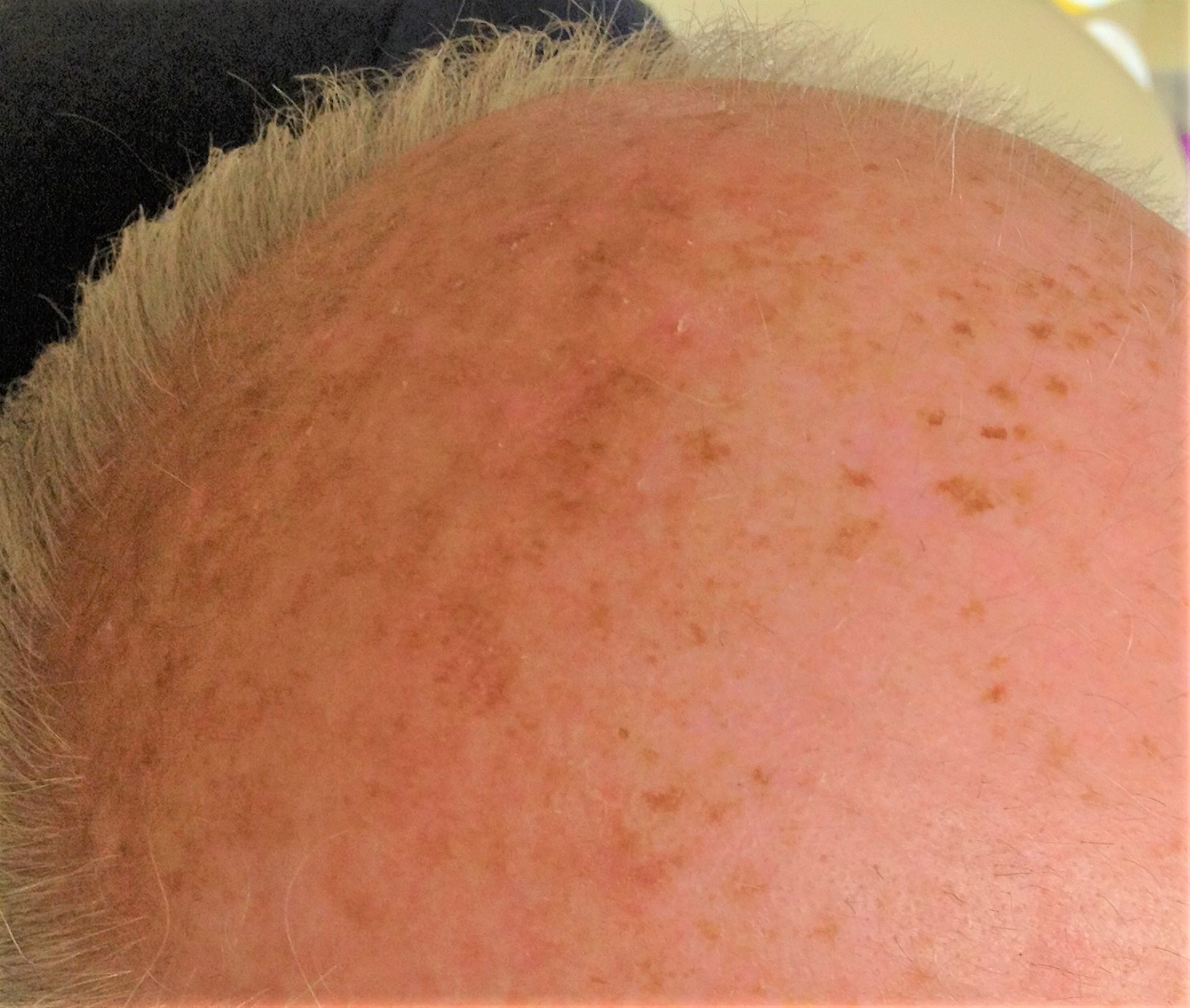
Cryotherapy for skin growths is a treatment offered at Compleet Feet (Alton’s Minor Surgery Skin Clinic) by Katrina Waller, the clinic’s aesthetic podiatrist. She also uses this freezing technique for other benign superficial skin growths to include seborrheic keratosis, actinic sun damage and warty growths. Anything suspicious with potential malignancy is not treated and appropriately referred on. A podiatrist is best placed to detect causes of concern and understand the skin with regard to wound healing.
What is Cryotherapy?
Cryotherapy is also called cryosurgery or cryoablation. It is the application of targeted freezing to destroy tissue structures. In dermatology it is used for the treatment of skin neoplasm irregularities whether benign or malignant. In podiatry it is commonly used to eradicate viral verrucae. Care must be taken, to be precise with application of either liquid nitrogen or nitrous oxide to limit unwanted tissue destruction.
What is a CryoPen?
One of the most precise and controlled devices used in dermatological practice is the Cryopen. A Cryopen can cosmetically treat small to large areas. Depending on location and thickness of the skin the size of tip applicator is chosen. Each 5 seconds of freezing equates to 1mm depth skin frozen. Freezing is to -89 degrees. An ice ball can visibly be seen to develop and take a few seconds to thaw. Erythema, localised inflammation soon follows freezing.
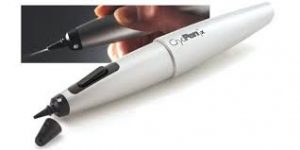
Hand held Cryopen offers precise targeted freezing for great cosmetic results
What to Expect After Freezing
The treated skin lesion basically has been subjected to frost nip/ bite. Resulting tissue destruction occurs. The body responds by localised inflammation and developing a blister. The blister can be superficial and just peel off or become a scab. The scab if left alone will drop off within 7-14 days to leave healthy pink healing skin underneath.

Previously treated seborrheic keratosis have scabbed 1 week later. New ones treated exhibit classic immediate inflammatory response.
What Can be Treated with a Cryopen?
The cryopen is great for treating skin tags around the eye and on the face and ears. Sometimes 2 treatment sessions are required. It is best to give a lighter freeze around delicate areas rather than a deep freeze to minimise unwanted outcomes. Eyelids are thin. A good cosmetic outcome must always be considered. The cryopen is also great for actinic sun damage and seborrheic keratosis. The scalp is a perfect area to treat with the cryopen.
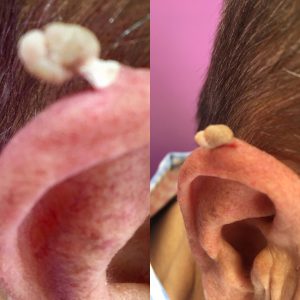
Skin tag on ear base frozen with a cryopen. Note how the skin turns white when frozen.
Other conditions great for freezing are seborrheic keratosis, but multiple cartridges are often required. This means it maybe more cost effective to perform electrosurgery. Outcome is the same, although scabbing is often more superficial with the cryopen and analgesia is not required.
Cryopen Versus Electrosurgery
At Compleet Feet both the cryopen and electrosurgery are used for benign skin growths. They both have different merits. A consultation must be performed prior to any treatment to check a patient’s suitability and to discuss expected outcomes. The main benefit of the cryopen over electrosurgery is that no analgesia is required, although there is still some discomfort with sharp stinging. The cryopen can be less invasive so better for more delicate areas with reduced scarring.
Electrosurgery is better for larger areas of skin growth removal. To freeze large areas of seborrheic keratosis would potentially require many cartridges of nitrous oxide. It therefor best to lightly hyfrecate such large areas. Electrosurgery also is good in sealing off, coagulating small blood vessels so healing downtimes are quicker.
When freezing a growth, time is required for tissue damage to occur and lesion to ‘drop-off’. With electrosurgery results are generally instant. Generally only 1 session is required and permanent. Often with cryotherapy the freeze is not deep enough and growths regrow, so additional sessions are required. All areas though to be treated need to be either numbed with anaesthetic cream or injected unlike with freezing.
Unwanted Outcomes of Cryotherapy
Normal outcomes are blistering, peeling and scabbing. Unwanted outcomes other than infection can be a little bit of localised numbness and skin pigmentary changes. Pigmentary changes can be either hypopigmentation (reduced pigment) or hyperpigmentation (increased pigment). These issues are discussed during the consultation. Good skin care pre and post treatment negates a lot of unwanted issues e.g. SPF sun block and not picking scabs.